Showing posts with label DBT. Show all posts

Monday, 28 November 2022

Was it a Good Idea? Dialectics again

In a similar vein to my recent post Difficult ≠ Disaster, I have been practising challenging my tendency to black and white thinking. 

Last weekend I took part in a dance performance, the first I have done in nearly four years. It involved lots of weekend rehearsals, time away from Lil' Peggy and Mr Peggy and one extremely long and stressful day for all of us! I deliberated for a long time before committing in August because I couldn't decide whether it would be a Good Idea or a Bad Idea to participate.

It's a particularly autistic thinking style although obviously only too familiar to most non-autistic people as well. We just seem to lean especially towards categorising things into two extremes: Good or bad, possible or impossible, nice or horrible, right or wrong.

For me, it makes the world easier to navigate: if I know what is what then I know what to expect, how to respond correctly to things, and it's clear what is safe, good and acceptable and what needs to be avoided. Grey areas are confusing and require a lot of processing, for which I don't always have capacity (or which takes away from my capacity for other things).

So it's a logical, sensible thing for my brain to do, to economise on power by simplifying things and ultimately to keep me "safe" by making sure I don't run into trouble of any kind (anything from physical accidents to social rejection).

The problem is, there are a couple of side effects.

  • Things don't just fit into those categories. Most things in the world are a mixture of positive and negative, and there are situations where rules change and need to be flexible. Things can fit in more than one category or switch categories depending on context. 
  • It can result in the "safe" option shrinking and shrinking to make sure I'm really certain it's safe.
  • You can miss out on or eliminate things that would bring some benefit because they also have negative aspects.
  • You can appear judgmental or critical (or overly liberal!) if you draw your lines in the wrong places. Which in itself is an example of what I'm talking about! There usually isn't a "right" or "wrong" place to draw the line - different people draw their metaphorical lines in different places!

So how to avoid these pitfalls if you are a naturally black-and-white thinker? Firstly just realising that you see and interpret the world through that lens can help. Once you realise and notice yourself doing it (as I did above!) you can start to enquire as to whether that's the only way it can be seen or whether there might be more options.

For myself, I think I've found three alternatives to a black and white view:

1. Perhaps most obviously but perhaps most difficult for a habitually and naturally binary thinker, is to see a continuum. Although there is an extreme at each end, states exist in between. To be honest, I think as well as being hard to do this one may not be the most helpful because even a continuum suggests the relationship between the two extremes is a linear scale - more to less, good to bad - which it may not always be (it may vary dependent on context, for example).

2. Get dialectical about it: both of these things can be true! I have waxed lyrical about this phrase before so I'll keep it brief, but if you can get your binary head around entertaining the coexistence of opposing states it will truly change your internal landscape (in a good way).

3. If that's a step too far, sometimes a manageable first step for me in shifting my thinking or perception is just to subtly relabel my categories. Instead of possible and impossible, I might choose likely and unlikely or easy and difficult. Bad and good might become upsetting and enjoyable. The lines soften, possibilities other than the extremes begin to exist.
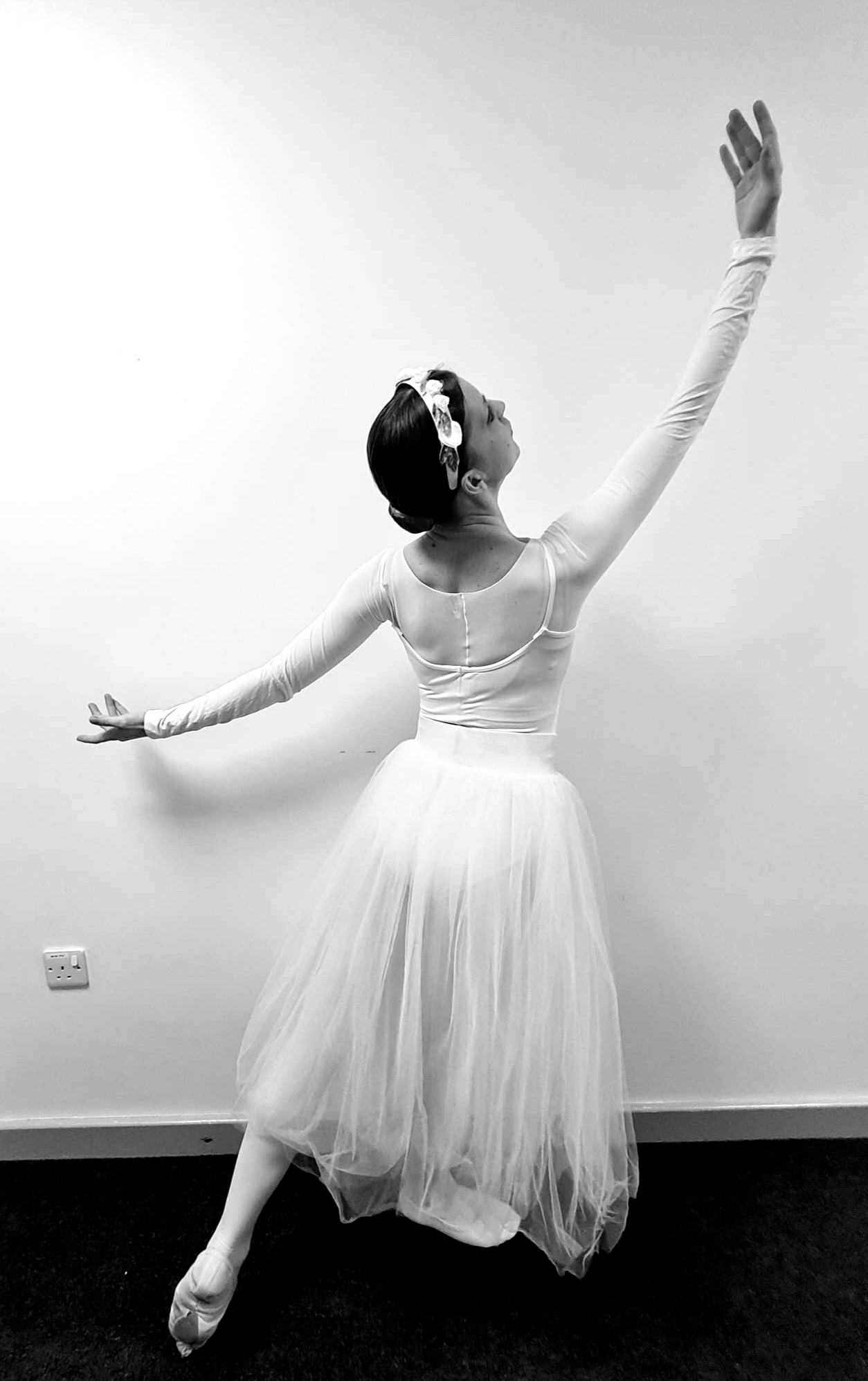
I did the project and of course, it wasn't a Good Idea or a Bad Idea. I kept having moments where I thought I'd definitely done the Wrong Thing by doing it, or the Right Thing. When really, I had just done A Thing. There were positives and negatives. Moments where I remembered and relished in my love of dance and was so glad I hadn't let myself move further and further from that world, and moments where I wished so hard that I didn't have to put my small person through so much upset and spend so many of my resources and down time being sociable at the weekend when I am usually recharging. Swings and roundabouts. It doesn't have to be one or the other.

I'm glad I did it, and I'm glad it's over.

Friday, 15 April 2022

Skillz and Tooolz

Skills I have used this week, in no particular order. Some of them are old faithfuls, some are new trials or discoveries, and some I have intentionally resurrected as the usefulness of going back to things that have helped in the past has been highlighted to me. Sadly a few are not currently available to me, like ballet, massage, and probably others. There are undoubtedly some I've missed, but a good few here to give you some ideas. If you want more information on any of them just give me a shout in the comments or by direct message.

Trying different intense "push" movements instead of destructive physical actions
Writing (CBT and blogging and general brain dumping)
Going in my nook
Old skills such as emailing updates before sessions to help me talk or make sure I stick to my plans
Talking to people and verbalising my head contents
Not giving space to thoughts/urges that are untrue and unhelpful, even if they feel like they are true and helpful
Reminding myself of why those things aren't true and reasons why I do life differently now
Allowing amygdala to party when it really needs to, but not in a destructive way
Sensory walks - touching and smelling the conifer leaves, tiptoeing along the kerb etc
Tai chi
Paying attention to what my body is telling me and how it tells me that (eg. I needed to wear my noise-cancelling headphones the whole time I was in town, not just in noisy shops. I was holding the ends of my sleeves and putting my Tangle in my mouth - seeking tactile and proprioceptive input. My stomach had a sicky feeling of anxiety. I wanted my hood up at the beginning of my sensory walk - wanting to be enclosed and reduce sensory input. My shoulders were up high and tense.)
Achieving small tasks such as cooking a meal, booking an appointment or sweeping the kitchen floor
Stretching/moving my body
Sleeping
Noticing how many things I have actually coped with and why things are difficult right now
Putting on upbeat music
Soothing rhythm breathing
Safe/calm/happy place visualisation (! Bet you never thought you'd hear me say that!) and tapping
Playing games on my phone
Jigsaw puzzle
Colouring
Reading
Playing mindfully with Baby Peggy's toys (and Baby Peggy of course!)
Cuddles with Baby Peggy
Message a friend
Fidget tools eg. Tangle

Friday, 28 August 2020

Both of these things can be true (dialectics)

 Sooo, here is a thing that has popped up in an awful lot of conversations this week. Different people, different scenarios, and not just me going on about it special-interest-style - it's emerged spontaneously in conversation, brought up by either person. Although true to character it is often me that gets excited and starts yelling about it when I notice we've ended up there again. I do love making links and identifying things: it helps the world connect together and make sense.

I will always remember a particular nurse who was oft heard to remind patients "both of these things can be true." I think of her every time I exclaim it mid-conversation, and I will never forget the mind-blowing effect it had on me the first time I heard it. It's a devastatingly simple concept, but was a whole new world to me, two things being true at once, the world not being binary black and white boxes. Transformational!

When I am anxious about an upcoming event I get asked, "will you even enjoy it at all"? or "is it worth putting yourself through this?" and I find myself trying to explain the conundrum of how it's OK to go because although I am and will be anxious, I will have fun too. Then I realise it's really simple: it's that thing again! Both of these things can be true. Although anxiety may at a first glance appear to preclude positive emotions, in truth I can have anxiety and have enjoyment at the same time. I have anxiety most of the time so it's pretty lucky that's true or my life would be incredibly dark and dismal. Two statements that seem completely at odds with one another may actually both be true.

The principle works for a whole host of scenarios. 

A teenager may want independence and want the support and care of their parents

A parent may love their child and impose consequences for their behaviour

You may have an argument with someone and still be friends with them

You may be terrified of something and you may want (or need) to do it anyway

In some cases we may only even see one of the truths - certainly only give one any weight. Because I have a one-track mind, I forget that more than one thing can happen at once. I note the uppermost thought or emotion occurring in a time of distress and take that to be the truth. 

Because our brains are programmed to keep us safe they are particularly alert to danger and keen to warn us of potential threats (remember if our brain perceives a threat as real it acts as though it is, whether that makes logical sense or not), so we are likely to form speedy assessments in situations where there is any possibility of "danger" (including danger of being rejected or overwhelmed). This can give us a tendency to think in a very black and white way (particularly characteristic of autistic people anyway), to jump to conclusions and mind read what we assume others "must" be thinking. And it means that the uppermost thought or emotion tends to be the most threatening one.

If I have a disagreement with somebody, in my head I think they think I am wrong, which in the immediate instance, they probably do. The trouble is, this becomes my truth. I think that that then defines their opinion of me as a person. I forget the quite possibly simultaneously-occurring truth that they like me and/or respect my opinions.

I make a mistake and I forget that alongside "I got it wrong" can exist the truths "I meant well," "I tried my hardest," "I am loved regardless."

So I'm glad this has come up repeatedly in my conversations because it's so easy to forget, but it's one of the many wonders of DBT!

Scenarios paraphrased from: https://www.mindsoother.com/blog/how-to-think-and-act-dialectically

Further brief introduction at https://www.sheppardpratt.org/news-views/story/dbt-101-what-does-dialectical-even-mean/


Thursday, 21 May 2020

Do I have to be sad? Why?

The functions of emotions are to motivate behaviour, to communicate to others, and to communicate to oneself. This short clip explains beautifully. It will use no more than 150 seconds of your life but could open a whole world of understanding to you (sorry, I really love DBT!!).


As you'll know from my previous post, I've been visited a lot by sadness recently. Now, instinctively I really hate sadness. My goodness, it hurts so much. Loss, endings, emptiness, aloneness - they're not pleasant to feel. But I've been on this therapy train for long enough now to pay attention. My life experience tells me that if I ignore an emotion is only going to spring up on me and shout its message louder until I deal with it. It might bog off for a bit, but it will come to get me, and it won't be pretty. And by then I probably won't even know why I have it so it will be so much more difficult to resolve.

I've made a treasure basket (bowl) of
sensory objects that are meaningful to me
So the sadness is shouting pretty loudly right now, and I've made a conscious effort to allow it to be there, talk about it, and to bear it in a healthy way (self soothe, distract, mindfulness - the three pillars of emotional regulation oh how I love DBT ha ha! Useful recently have been working on my sensory cave project, being outside in the countryside, listening to music, starting some gardening projects, talking to friends/family/professionals, listening to meditations, time in my sensory cave and being honest about how I feel even if I'm worried about the effect it will have on others).

The next step, as I like to get my old Brian engaged in things too, is to really explore sadness a bit more. What is it for? What is it telling me? How can I act helpfully towards it to ease my suffering or bear my pain (suffering being an unnecessary addition to pain - there's a whole other can of worms discussion!)?

First port of call is my emotional regulation handouts (from Marsha Linehan's DBT Skills Training Handouts and Worksheets, 2015). Amongst others, sadness is prompted by losing something or someone irretrievably, being separated from someone you care for, being alone, or feeling isolated or like an outsider, things being worse than you expected, things not being what you expected or wanted. Well, my sadness is pretty understandable and accurate then. (As an aside, biological changes and experiences are also included on each emotion sheet, which can be really helpful if you're not sure what emotion you're feeling.) No need to act opposite!

I'm interested to look at the listed expressions and actions of sadness then, to see whether I've been using any of them. Do they come naturally to me, or perhaps not, because I have tended to avoid sadness where possible? Maybe if I don't use them naturally they could help me process the sadness.

  • avoiding things
  • acting helpless, staying in bed, being inactive
  • moping, brooding, or acting moody
  • making slow, shuffling movements
  • withdrawing from social contact
  • avoiding activities that used to bring pleasure
  • giving up and no longer trying to improve
  • saying sad things
  • talking little or not at all
  • using a quiet, slow or monotonous voice
  • eyes drooping
  • frowning, not smiling
  • posture slumping
  • sobbing, crying, whimpering
  • other _______


Looking at the list, some seem helpful and others less so. Perhaps more markers than suggestions, or ways to understand our behaviour compassionately before inviting sadness with us as we continue life. I think the list demonstrates how we can get stuck in a spiral of deepening sadness too, as several of those actions will feed back sadness to the brain and increase the intensity of the feeling.

Just hope you're not such a snotty crier as me!
Some, like crying, are definitely good to try though: no matter how much it feels like you'll never stop once you start, I can assure you it's not true! I have found if I can let myself cry (proper crying, not the leaky face type that comes upon me uninvited!) it really helps to be able to carry on life. It's an acknowledgment. Yes, I am sad. I have a gap in my life and it hurts. That's OK and I'm going to gently carry on with what I want to be doing in life. (Love to throw in a bit of Compassionate Mind too...)

Lastly, the sheet looks at aftereffects of sadness, which could include not being able to remember things, feeling irritable, touchy or grouchy, blaming or criticising yourself, ruminating about sad events in the past, insomnia, appetite disturbance, indigestion and others. Ties in nicely to the post I'm planning on executive function, and hopefully allows us to be a little compassionate to ourselves, understanding why we may have some seemingly unrelated difficulties, and continuing to care for ourselves in a constructive way.


As a final note, another great look at sadness I found is here (What is Sadness?). It takes you through a similar process but points out a few different things such as some people's tendency to avoid sadness (See also this 80 second clip on avoiding sadness. It references Borderline Personality Disorder but is relevant to most people.) and how we may want to respond to others' sadness. I particularly like this quote on the function of sadness:
The universal function of sadness is to, in some way, signal for help. This can be a signal to others saying that we need comforting, or to ourselves to take some time and recoup from our loss.
That is the message I'm going to take away from this curious little exploration of my sadness. I have a human need for comfort, and it is entirely right to experience that need and tend to it in a healthy way. As my psychiatrist told me all the time, sadness is there to show that you care.