In a similar vein to my recent post Difficult ≠ Disaster, I have been practising challenging my tendency to black and white thinking.
Last weekend I took part in a dance performance, the first I have done in nearly four years. It involved lots of weekend rehearsals, time away from Lil' Peggy and Mr Peggy and one extremely long and stressful day for all of us! I deliberated for a long time before committing in August because I couldn't decide whether it would be a Good Idea or a Bad Idea to participate.
It's a particularly autistic thinking style although obviously only too familiar to most non-autistic people as well. We just seem to lean especially towards categorising things into two extremes: Good or bad, possible or impossible, nice or horrible, right or wrong.
For me, it makes the world easier to navigate: if I know what is what then I know what to expect, how to respond correctly to things, and it's clear what is safe, good and acceptable and what needs to be avoided. Grey areas are confusing and require a lot of processing, for which I don't always have capacity (or which takes away from my capacity for other things).
So it's a logical, sensible thing for my brain to do, to economise on power by simplifying things and ultimately to keep me "safe" by making sure I don't run into trouble of any kind (anything from physical accidents to social rejection).
The problem is, there are a couple of side effects.
- Things don't just fit into those categories. Most things in the world are a mixture of positive and negative, and there are situations where rules change and need to be flexible. Things can fit in more than one category or switch categories depending on context.
- It can result in the "safe" option shrinking and shrinking to make sure I'm really certain it's safe.
- You can miss out on or eliminate things that would bring some benefit because they also have negative aspects.
- You can appear judgmental or critical (or overly liberal!) if you draw your lines in the wrong places. Which in itself is an example of what I'm talking about! There usually isn't a "right" or "wrong" place to draw the line - different people draw their metaphorical lines in different places!
So how to avoid these pitfalls if you are a naturally black-and-white thinker? Firstly just realising that you see and interpret the world through that lens can help. Once you realise and notice yourself doing it (as I did above!) you can start to enquire as to whether that's the only way it can be seen or whether there might be more options.
For myself, I think I've found three alternatives to a black and white view:
1. Perhaps most obviously but perhaps most difficult for a habitually and naturally binary thinker, is to see a continuum. Although there is an extreme at each end, states exist in between. To be honest, I think as well as being hard to do this one may not be the most helpful because even a continuum suggests the relationship between the two extremes is a linear scale - more to less, good to bad - which it may not always be (it may vary dependent on context, for example).
2. Get dialectical about it: both of these things can be true! I have waxed lyrical about this phrase before so I'll keep it brief, but if you can get your binary head around entertaining the coexistence of opposing states it will truly change your internal landscape (in a good way).
3. If that's a step too far, sometimes a manageable first step for me in shifting my thinking or perception is just to subtly relabel my categories. Instead of possible and impossible, I might choose likely and unlikely or easy and difficult. Bad and good might become upsetting and enjoyable. The lines soften, possibilities other than the extremes begin to exist.
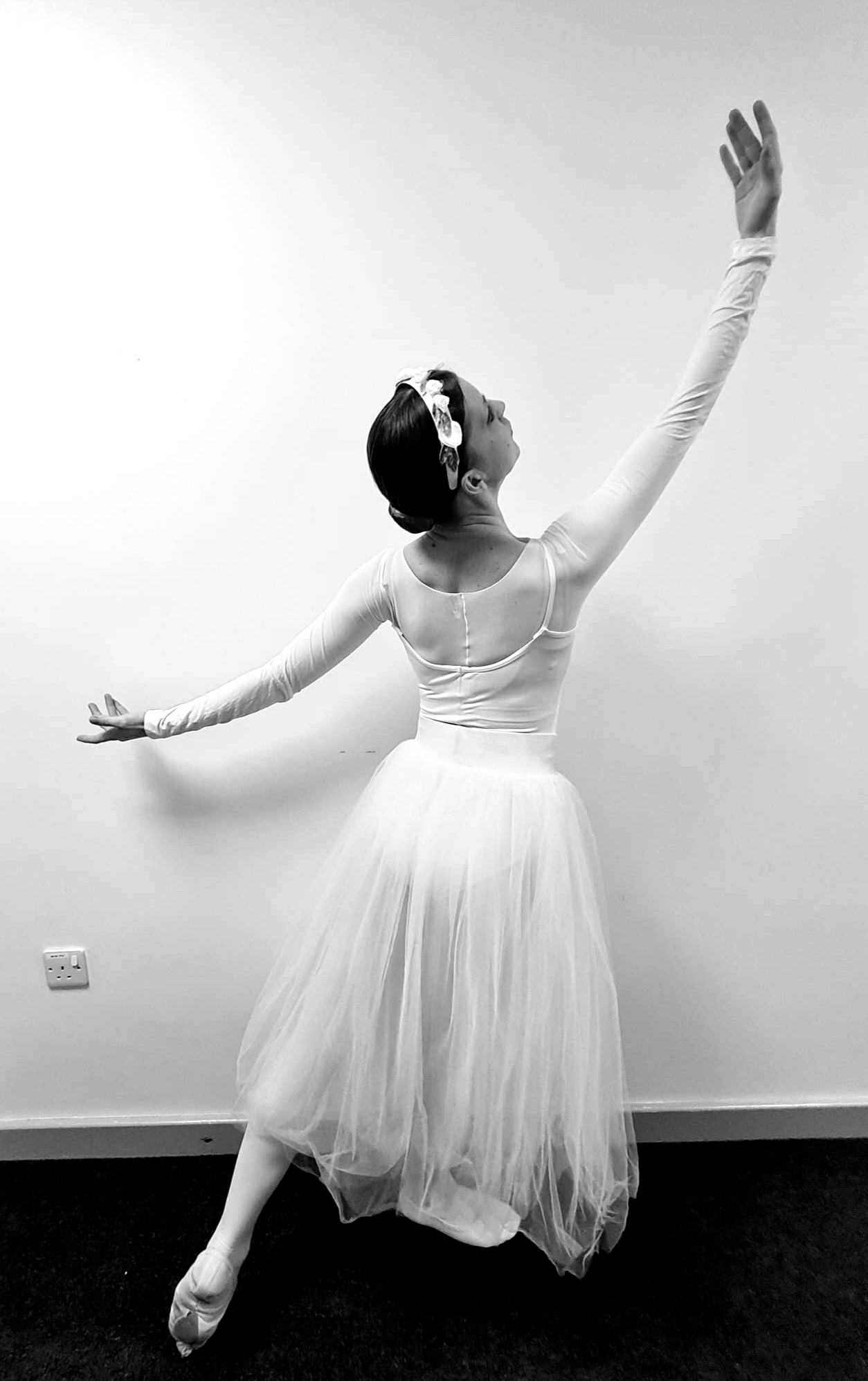
I did the project and of course, it wasn't a Good Idea or a Bad Idea. I kept having moments where I thought I'd definitely done the Wrong Thing by doing it, or the Right Thing. When really, I had just done A Thing. There were positives and negatives. Moments where I remembered and relished in my love of dance and was so glad I hadn't let myself move further and further from that world, and moments where I wished so hard that I didn't have to put my small person through so much upset and spend so many of my resources and down time being sociable at the weekend when I am usually recharging. Swings and roundabouts. It doesn't have to be one or the other.
I'm glad I did it, and I'm glad it's over.
