Monday, 28 November 2022

Was it a Good Idea? Dialectics again

In a similar vein to my recent post Difficult ≠ Disaster, I have been practising challenging my tendency to black and white thinking. 

Last weekend I took part in a dance performance, the first I have done in nearly four years. It involved lots of weekend rehearsals, time away from Lil' Peggy and Mr Peggy and one extremely long and stressful day for all of us! I deliberated for a long time before committing in August because I couldn't decide whether it would be a Good Idea or a Bad Idea to participate.

It's a particularly autistic thinking style although obviously only too familiar to most non-autistic people as well. We just seem to lean especially towards categorising things into two extremes: Good or bad, possible or impossible, nice or horrible, right or wrong.

For me, it makes the world easier to navigate: if I know what is what then I know what to expect, how to respond correctly to things, and it's clear what is safe, good and acceptable and what needs to be avoided. Grey areas are confusing and require a lot of processing, for which I don't always have capacity (or which takes away from my capacity for other things).

So it's a logical, sensible thing for my brain to do, to economise on power by simplifying things and ultimately to keep me "safe" by making sure I don't run into trouble of any kind (anything from physical accidents to social rejection).

The problem is, there are a couple of side effects.

  • Things don't just fit into those categories. Most things in the world are a mixture of positive and negative, and there are situations where rules change and need to be flexible. Things can fit in more than one category or switch categories depending on context. 
  • It can result in the "safe" option shrinking and shrinking to make sure I'm really certain it's safe.
  • You can miss out on or eliminate things that would bring some benefit because they also have negative aspects.
  • You can appear judgmental or critical (or overly liberal!) if you draw your lines in the wrong places. Which in itself is an example of what I'm talking about! There usually isn't a "right" or "wrong" place to draw the line - different people draw their metaphorical lines in different places!

So how to avoid these pitfalls if you are a naturally black-and-white thinker? Firstly just realising that you see and interpret the world through that lens can help. Once you realise and notice yourself doing it (as I did above!) you can start to enquire as to whether that's the only way it can be seen or whether there might be more options.

For myself, I think I've found three alternatives to a black and white view:

1. Perhaps most obviously but perhaps most difficult for a habitually and naturally binary thinker, is to see a continuum. Although there is an extreme at each end, states exist in between. To be honest, I think as well as being hard to do this one may not be the most helpful because even a continuum suggests the relationship between the two extremes is a linear scale - more to less, good to bad - which it may not always be (it may vary dependent on context, for example).

2. Get dialectical about it: both of these things can be true! I have waxed lyrical about this phrase before so I'll keep it brief, but if you can get your binary head around entertaining the coexistence of opposing states it will truly change your internal landscape (in a good way).

3. If that's a step too far, sometimes a manageable first step for me in shifting my thinking or perception is just to subtly relabel my categories. Instead of possible and impossible, I might choose likely and unlikely or easy and difficult. Bad and good might become upsetting and enjoyable. The lines soften, possibilities other than the extremes begin to exist.
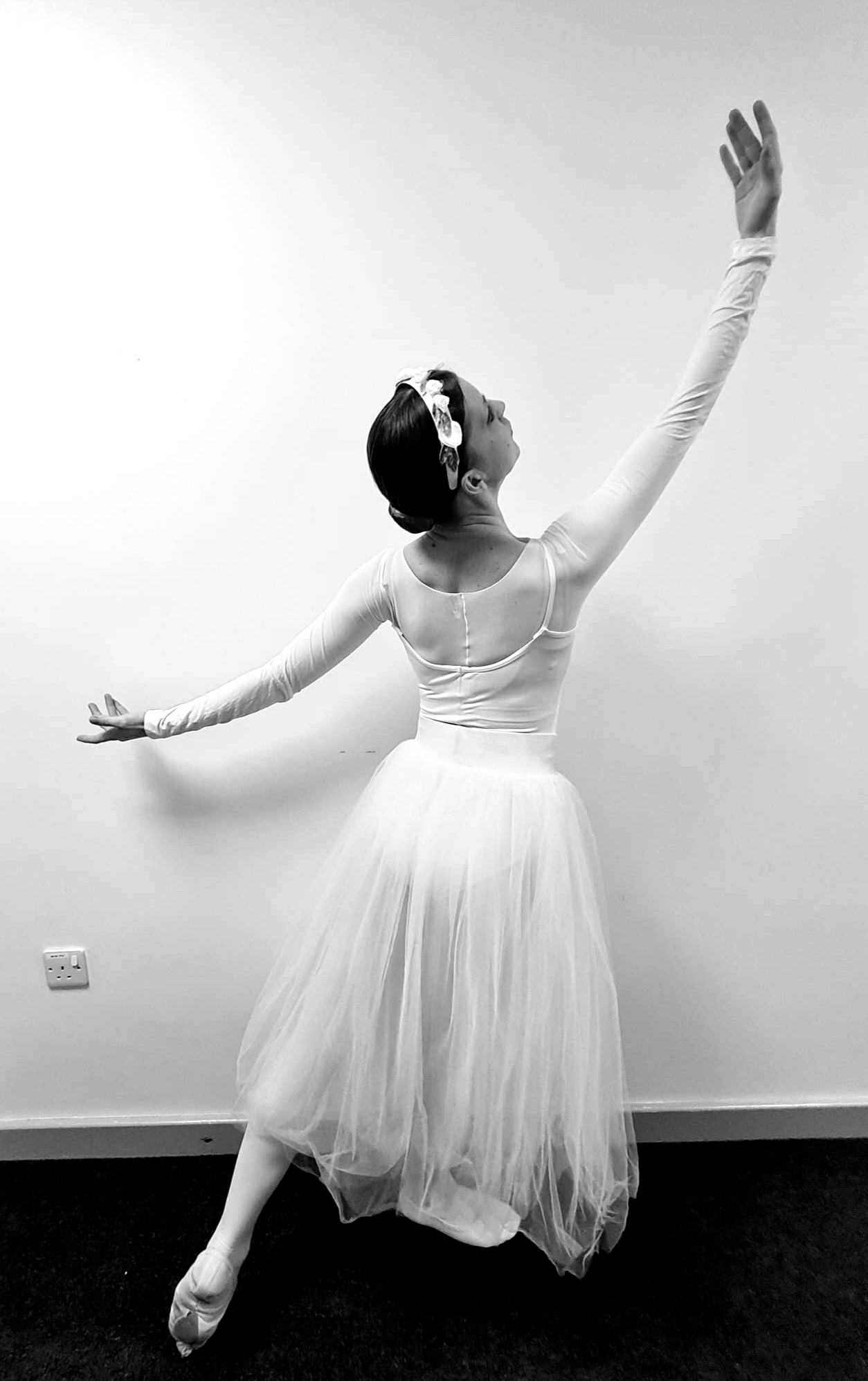
I did the project and of course, it wasn't a Good Idea or a Bad Idea. I kept having moments where I thought I'd definitely done the Wrong Thing by doing it, or the Right Thing. When really, I had just done A Thing. There were positives and negatives. Moments where I remembered and relished in my love of dance and was so glad I hadn't let myself move further and further from that world, and moments where I wished so hard that I didn't have to put my small person through so much upset and spend so many of my resources and down time being sociable at the weekend when I am usually recharging. Swings and roundabouts. It doesn't have to be one or the other.

I'm glad I did it, and I'm glad it's over.

Monday, 14 November 2022

I love the hat!

I'm so proud of this hat! 


I decided to make rather than buy because I enjoy knitting and I haven't knitted anything for ages, and I'm trying to make sure I do some activities just for me that I enjoy when I can. So I'm proud I prioritised me rather than just buying. It also feels more personal and special than any old hat and more sustainable than buying (though that might just be my simple perception!).

I'm also proud that I taught myself a new skill. I chose a pattern that I liked but it used a technique I've never learnt before that looks complicated. So instead of picking something else I remembered that I like learning so I decided to give it a go. And then I taught myself! Usually I would think that I need somebody to teach me because it's too complicated for me to figure out and easier to learn in person. But I had a look round the Internet and worked out how to cable all by myself.

I'm proud that I did it well. I made quite a few mistakes along the way but for each of them I managed to figure out where I had gone wrong and what I had done and how to fix it. Previously I've always had someone else around more experienced than me who can fix mistakes or help me fix them, but I found out if I think about it I can work it out myself. I'm a better knitter than I thought, and than I was when I started the project. Of course there was also plenty of whingeing and panicking that Mr Peggy tolerated very well!

And finally, I'm proud it's not perfect. It's good, but it's not perfect - it's not 100% even on every row and stitch, and I didn't reverse the sewing for the turnup when I was sewing it up (my sewing up isn't the neatest either!). So I'm proud that I can take ownership of it and say "Yes, I made this. Yes, it's not perfect. But it's also good, and I like it." I don't have to be perfect and not everything I do has to be perfect. It's a cute, cosy hat, I made it, I taught myself a skill, I did some problem-solving and puzzling and I love the end product, imperfections and all. Plus, it means my one-of-a-kind won't be mistaken for a production line replica ;)

Who cares whether the toddler actually likes it 🤷‍♀️🤣 


(He pulls it straight off, as Mummy helpfully made it plenty big enough for the ever-growing giant. My friend is going to fleece line it for me so we'll see whether that makes a difference.)

Monday, 7 November 2022

Lost in a helicopter (sensory-being/object mindfulness)

Another day, another sensory-being mindful walk. I don't get these so often now - my sensory-being* is usually shared, which is wonderful in its own way - so being given nearly half an hour to myself with the instruction/agreement to use it for a mindful wander was a relished treat.

And the fact that I could take up that opportunity in autumn is not taken for granted. My brain was in a place where I could lose myself in the moment where often I tend to either become overwhelmed because of associations and memories, or to avoid or dissociate for fear of that happening.

So anyway, off I toddled on my mindful wander. My feet found a spiky floor that they enjoyed feeling through my shoes, and then some benches that are pleasant to stand on. However my attention wasn't drawn after that by the Wander Path (oh pants, it looks like I still haven't written a post about that to link to!) like it often is - most times some sight or texture will invite me in to linger but none did. I didn't push it, just wandered on, waiting to see. It was the scent of the fir trees in the end that called me, but what it called me to was a helicopter - the kind that you used to spin in the wind as a child; sycamore seeds.

And so I was lost to the world for a good five or ten minutes, first feeling the flat sides between my fingers - still and moving - the veins of the seed pod making gentle ridges beneath my skin. Inspecting it closely, drawn into the visual pattern, then turning it sideways and seeing the pale, smooth line it made against the backdrop of fallen leaves on the path below, feeling that line between my thumb and index finger, smooth yet sharp, curving round infinitely. The bump of the seed at the end in contrast. Then deeply breathing in to see whether it had a scent of its own: not the sniff you do when you think you want to smell something, or you want to demonstrate that you are smelling, but the deep slow inhale through the nose that allows your sensory receptors to really do their job to the full. Helicopters have a scent. Then I have to say I was thinking about as many senses as possible and did have to find out if it had a taste too, so I did lick the helicopter. I felt the patterns from earlier on my tongue. I became more deeply acquainted with the helicopter, understanding more of its being with every new aspect I experienced and the longer I spent on each. I went back to smelling, and one side smelt stronger than the other. The first side smelt stronger after I licked it - maybe one side smelt stronger because I had licked it more? It felt different between my fingers from when it was dry. I held it up to the breeze, watched it spin to the ground and it was gone. My moment finished, it passed on to its own next moment; the fleeting crossing of our paths stretched out by my curiosity and a suspended moment in time.

*sensory-being explained here by Jo Grace of The Sensory Projects, where I first encountered the concept. Or search my previous posts for my own witterings on the subject and how it overlaps with mindfulness - you can start here.

Friday, 30 September 2022

Difficult ≠ Disaster

Today is a difficult day. Its brings memories. It brings emotional states that are stored in my body and can be triggered by the tiniest of events or environmental factors. It brings many thoughts of what life "should" be like and isn't, and I have to try and remember/believe that the "should" is the wrong way round. 

It's not only today: throughout most of September I deal with some level of the above, but today is one of the worst days. This year I'm primed with the exhaustion of the return to work in a very busy class after the summer holidays and a couple of weeks of teething/coldy-interrupted-toddler-sleep on top of the lurking reminders of the past. The week has been exhausting, throwing a marvellous array of extra missiles my way: busy weekend, changes to plans, being unwell myself, a particularly difficult and distressing night of very little sleep at all, you get the idea. 

Before my work week even began I was treated to a new and wonderful adventure of dissociative experience. By which I mean not wonderful and not a treat. Thankfully not bad in the grand scheme of dissociation options but enough to unsettle things even more. In some ways it feels as though the years in-between never happened. It's a pretty clear clue that my brain is overtaxed and not happy about it anyway.

I pushed through two days of work, questioning all the time whether I should be there: am I doing a good enough job, do I still have enough capacity to do a good enough job at home as well, am I making things worse by being at work, am I making them better, what outweighs what - where is the balance hanging? 

I've tried to do everything right - I've kept talking about it, to professionals, to Mr Peggy, to colleagues, trying to keep everyone aware and in the loop. No surprises, no assuming people will somehow know by osmosis, no "you should have told us". I've put into practise the tips I've been given: breathing, grounding, verbalising, writing, asking for help. And finally, calling it. Existing conspicuously enough to say enough is enough. I need to stop now before a real crisis.

Now I have to sit with the fact that I've done that. And that I'll never know whether I really needed to or if I was just making a fuss and being lazy or self-centred or greedy. That I have made the day more difficult for others by making it more bearable for myself and my family. I have to sit with the thought "what if this is the beginning of a slippery slope?" and the fear that I will become unreliable again because of my anxiety/distress levels. 

Not just accepting but celebrating. He has my back.

But in the midst of all this there is plenty to be thankful for and plenty that is positive. The amazing Mr Peggy who sent the message above this morning and who constantly picks up the slack when I'm struggling (and all the time 🤣), reminds me to look after myself and reassures me that it's OK to. Lil' Peggy who no matter how many times he drives us mad with his hurricane exploration of the world and its possibilities can still soothe me with a momentary snuggle or smile. Colleagues and friends who understand and who affirm that I'm doing the right thing. The fact that I am out and about living my life, being able to be at work in order to have the dilemma at all. Recovery from mental health problems doesn't mean they go away and is by no means linear. I am certainly not at the best place I've been in the past few years, but neither am I at the worst. 

Today is a difficult day but not a disaster. I've listened to myself, I've made choices that I think were right for me. I have been gentle with myself and am sitting with that fact. Right now I am within my window of tolerance and think I may well be able to stay there, which for this day is a best possible outcome.

Thursday, 25 August 2022

Fine Mesh Part II: Sensory

Aside from language, I of course receive sensory information through a fine mesh. In fact perhaps this should have been Part I because the sensory world is more fundamental, but as a linguistic being my brain approached it through the linguistic lens first.

In the sensory plane my differentiations are again narrower and slight variation from normal or my expectation results in having to recategorise and my brain alerting me to "Error!". I think the narrowness of filter also means I can perceive sensory input as many, many pieces of data that I must process, rather than a whole or a few items. Or maybe the mesh is narrow because I perceive the input in that way?!

When perceiving through fine mesh, the simple data "I am hearing a sound and seeing a movement" may become "I am hearing another sound as well as the multitude of background noises, and the new sound is made up of differing pitches/timbres/volumes etc. I am also seeing a thousand new pictures a minute as something in my field of vision moves." My brain is trying to work out what all those pictures and sounds add up to and how that aligns with previous experiences to see whether I need to respond in any way.

It's no wonder I end up overwhelmed sometimes - even though I may not be consciously processing each item my brain is working overtime for me. A messy room becomes not just one messy room but 3264 (see "wild exaggeration" below!) items that need tidying.

It is said that autistic people tend to focus on the finer details rather than seeing the whole picture and it's hardly surprising if what we are perceiving is a whole lot of input that makes up the picture, rather than simply the picture! This goes for the metaphorical picture as well - any scenario in life such as a social situation or an event unfolding as well as a literal piece of art.

Perhaps prosopagnosia (face-blindness) is also related here. I am only very mildly affected by this, but maybe if I am perceiving many pieces of information it is harder to put them together to recognise one face. If there is a minor difference or lack of context the data don't all match so the connection is not made. And yet in compensating to over-recognise... maybe there is one feature that is similar and so in knowing that I need to make connections I assimilate the new face to one I know.

I've just realised that this chimes with something Temple Grandin speaks about in her book Thinking in Pictures that I was given for my birthday, and also Donna Williams in Somebody Somewhere. They both speak about fragmented perception and I have only just twigged that they are speaking of a similar (though in Donna Williams' case, much more extreme) idea. To literally see/hear/sense the fragments must be a very different way of being.

Another aspect of sensory input being finely sifted for me is similar to what I described in the previous post about linguistic accuracy. I may see things (or hear, smell, taste, feel etc) in a more precise or attuned way, so I might register a display at school not being straight or symmetrical more quickly than others and be more bothered by it. A speck of dirt on a dish I've washed is detected by my fine mesh and recategorised as "not clean". Perhaps that's why I love asymmetrical designs: errors don't glare in the same way, and an intentional "error" is fun because you meant it (cf. puns, wild exaggeration of numbers, language play like spoonerisms or swapping vowels, mismatched socks etc...). 

I tend to eat one food per forkful because too many flavours and textures at once are overwhelming and I don't taste or feel any of them - in fact it blew my mind when I realised as a grown up that some people would put meat and vegetables on their fork together! It had just never occurred to me to do that! I can enjoy them and taste them better one at a time, so I do. In a sauce, where the flavours should blend together sometimes I can't process them all like that and one gets picked on by my brain and that is all I can taste (usually salt but sometimes a herb or other spice). I only add salt to bland foods such as chips for this reason - then I am not missing out some other flavour by tasting the salt. Ma Peggy and Peggy Toes (one of Little Peggy's Aunties) have extremely fine meshes for taste - Ma Peggy couldn't drink milk from a particular supermarket for several years because she couldn't stand the flavour and Peggy Toes can detect a change in a familiar recipe in an instant, asking what has been done differently.

I don't have perfect pitch but my pitching is closer than average. A slight error in tuning is bothersome. Some CD/mp3 players have a function where the music can be slowed down or sped up and this is used at times in dance classes to match the music to the speed required for an exercise. I could always hear when this had been left on accidentally, even if just by one notch, and often nobody noticed unless I commented (when they would usually discount my tentative comment - which was actually a desperate plea to put me out of my misery! - unless they checked, when they always found it to be so!). Even when it had been set deliberately it caused me constant discomfort to hear the distortion even if slight. My fine mesh alerted me perpetually to the slight difference from normality: "This is wrong".

These are just some examples - I could probably find them for other senses, these are just those that pop to mind first.

As with my need for precision in language, these issues if verbalised can get me labelled as obnoxious, pedantic, fussy, a pain, so again I often try to mask by not raising them. Of course that makes my comments inconsistent and perhaps thus less believable and even more inviting of the judgmental labels. And the mesh or my tolerance for variation/error does change with my stress levels which means sometimes I notice less or am able to mask more.


Well, I've wandered far from the original beginnings of my musings but it's been very interesting! Some of it is just ideas or typing as I think so it might not make much sense or I might change my mind about it in future, but I'd be interested to hear your thoughts and experiences.

Do you have fine meshes or course meshes, or a variety? Do you like your mesh style? Are there other types of meshes I've not thought of beyond linguistic and sensory? 

For me, despite the extra brainspace it takes up in perceiving, understanding and interacting with the world and the anxiety caused by my mesh being different from a lot of people's, the world is tremendously beautiful through my detailed and nuanced lenses and I wouldn't want it any other way. Precision is pleasing, details are delightful and accuracy is absolutely blooming lovely.


Edited to add rambling thoughts:

Could another lens be social? What would a social fine mesh be? Narrowly defined roles, behaviour, phrases, patterns in communication. That is what autistic people try and do in order to understand non-autistic communication and "get it right". But of course there is no fine mesh and we are inevitably lacking in some way. So we wish for a fine mesh because we are fine-mesh people, but the non-autistic social world has no fine mesh.

Fine Mesh Part I: Language

I experience the world through a finer mesh than average. Perhaps that is a large part of what being autistic means to me.

Mr Peggy and I often observe that my definitions for things are narrower than his - colours, words, categories and subcategories of object. For me the window of variation before something becomes a different thing is small. It is also important to me that things are correctly identified. If the wrong (for me) word is used it is not accurate. Inaccuracy sets off an alert of "Error! This cannot exist! It is not true!" in my brain which is incredibly difficult to quiet without being resolved. The fine mesh makes this happen a lot more often.

So I tend to be very precise with language. Pedantic is a word that has been applied throughout my life - probably accurate ;) 

My need for accuracy is partly related to truth - as explained above if a "wrong" word is used it registers as untrue, untruth being close to intolerable. And of course my default outlook being black-and-white doesn't help! But also, if things are not accurate and true as expected, the chaos of the world becomes even more overwhelming. I am confused because I don't understand what people are talking about, or it takes me longer to work out. In conversation this just looks like I'm being an awkward pedant when in reality I'm working overtime to keep up. And to really top off the world's chaos, if I can't depend on one thing being true - sometimes the very foundation of my understanding of the world (language) - what can I depend on? If words and concepts can change their meaning what else can? What is stable and dependable? How can I share an understanding with someone else if we are working on different foundations? Everything swims and the constants that I function on sink beneath my feet. I mean, imagine if gravity just stopped being true, right?! It wouldn't only be my world that became topsy-turvy!

Even on a simple day to day level, imagine you visit a different part of the country and ask for a bun. In the North you'll get cake; in the South, bread. (Hey, even bread and cake can be a contentious divide - banana cake or banana bread?!) Surprising, even funny, as a one off, but imagine everything being like that. It would be completely incomprehensible, exhausting, terrifying. You'd have no idea what to expect. And knowing what to expect is hugely important to everybody, but especially to autistic people precisely for the reasons I'm talking about here: because the world is so chaotic and our base anxiety levels are so high, and because a slightly different alternative may be completely intolerable on a sensory level too (such as a slightly different texture or colour) - to be suddenly and unexpectedly faced with an intolerable experience instead of what you imagined/expected can be highly distressing.

As a side note, one way I consciously mask every day is to not correct external inaccuracies. I correct myself frequently when speaking (and when writing - it's why I use so many parentheses and go back and edit "intolerable" to "close to intolerable"), not because I am holding myself to some high standard or criticising myself, but because it is more natural than allowing a possible misunderstanding to remain. It is easier and less effort to refine for accuracy than to contain those impulses .

A lot of corrections to other people's speech or to written material do escape because I don't catch them quickly enough, and the masking doesn't always work very well because it turns out my face usually doesn't succeed in wearing the mask even if I restrain myself from comment. I come across as overly critical but I am actually spending a lot of energy on inhibiting reflexes to make everyone else more comfortable! In fact if I correct you a lot it means I feel more comfortable in your presence to mask less!! I wish it were easier for people to know that it's not personal, neither is it judgmental (people think I think they're stupid if I "correct" them, which ain't true!) and I'm not being obnoxious. I'm refiltering what they've said so that it fits through my fine mesh and I can process it better, nothing more, nothing less.

More to come on fine mesh through a sensory lens.

Thursday, 18 August 2022

Good memories

I spend a lot of time talking about difficult memories, or certainly dealing with them, but today I had a lovely one. 

I was at our local farm shop for some baking ingredients (bargain ripe plums for a frangipane...) and I always take my time and let Little Peggy have a wander when we're out and about - the world is still a wonder to him and I love to see where his interest takes him, look at things from his perspective and think about what he's learning from it, but that's a post for another day!

Anyway, I digress! I found some beautiful plump juicy cherries and with great flexibility of thinking (I had not gone shopping for cherries) I went back for some after our trundle of the shop. 

The sight of those gorgeous cherries in their brown bag and then the feel of the scrunched up paper as I carried them to the till took me right back to a happy summer years ago (I don't imagine it was happy 100% of the time, but that was the emotion it evoked!).

When I bit into the first cherry later at home I was flooded with warm sunshine and memories of my sister and me having a cherry obsession and walking to buy them from the market every week, and one time sitting on the bus to Winchester eating cherries from a paper bag! The warm connected feelings of walking together spending quality time, or of somebody arriving home and declaring they had bought you cherries. And of exercising our new-found freedoms and discoveries after some difficult life circumstances. 

And it's funny, because I still like cherries and I buy them from the supermarket from time to time and think about how we used to treat ourselves and each other to them, but it was the whole experience, and particularly the texture of biting into the cherry and tasting it - so different from a supermarket cherry - that really transported me back. 

Thinking and experiencing are worlds apart and it's wonderful to have a purely positive example of that!