Why people want to hurt people, or things
Why people want revenge and repayment
Why people lie
Why people don't value truth, beauty and real love - wanting what's best for someone else first, what will make them happiest not you
What I think most people don't experience as I do:
Nature - water, sky, trees, wind
Animals
Monday, 30 May 2016

Anniversary
Make you smile, watch you sleep, love you when you weep
Hold hands and hold hope
To know me inside out and back to front to know you
How to hurt and how to heal
See that it is good
Hold hands all the years
Hold hands and hold hope
To know me inside out and back to front to know you
How to hurt and how to heal
See that it is good
Hold hands all the years
Sunday, 1 May 2016
Close
Sometimes I need to be so close I can't look at you
I'm safe when you touch me; it'll all be ok
Hold me tight, and muscle tension flows away
Sometimes we know each other better than ourselves. Sometimes can't fathom at all.
I can't always look, but you need me to
I'm safe when you touch me; it'll all be ok
Hold me tight, and muscle tension flows away
Sometimes we know each other better than ourselves. Sometimes can't fathom at all.
I can't always look, but you need me to
Monday, 18 April 2016
What is AS for me?
In no particular order, here are the things that AS means for me in my life.
Uncertainty is a huge issue for me. Maybe the biggest. If someone says "maybe I'll do this" I will spend the next indeterminable time period repeatedly going over the options of what will happen if they do or don't do that thing; how my day will look, what will I need to expect, what will I need to be prepared for, and I will be constantly questioning "does that mean they will do that, or they won't do it or they themselves don't know yet (in which case, again will they or won't they end up doing it?)", trying to work out the probability of each of the myriad possibilities of how the day will run. And the thing they are doing could even just be "I might go and buy milk" or "I might make a cake." If there is any uncertainty at all, the issue will remain in my mind as unresolved, like a flagged or unread email, demanding attention until resolved. If there is any emotional involvement with any of the options the chasing of thoughts escalates and often comes out physically in my body as feeling sick (if worried) or in repetitive gestures like finger wiggling or fist clenching if excited (though I think I manage to keep these down to only in private).

Another aspect of uncertainty is uncertainty of people's expectations. I need clarity in what is expected. I am very happy to do a task for you if I know exactly what you want, but if there are options and I have to guess, it becomes very stressful for me. If I know something is expected but I can't deliver because I don't know what or I don't have the skills, the situation seems inescapable to me and this has been the trigger for quite a high percentage of my 'shutdowns' or whatever you want to call them. The same applies to what is expected of me in a certain situation, for example when I am unsure what or how much I am expected to say, whether somebody is expecting a reply or whether they are making a joke.
Change is difficult to deal with. This can be change in my surroundings, like a rearrangement of furniture (even just a turning around of something on the work surface. Why? Why change things if they're fine? It's all wrong now. Something inside reacts and I don't even know what. It's like my whole world has been turned upside down. I can't work out what it is that I feel, but it's wrong. If someone can explain a reason for the change: e.g. "it makes more space on the surface" this can help) or a change in my expectation for the day. I think this could be linked to uncertainty, because if one thing has changed, how do I know I can rely on anything else to be as expected? As a side note, for me, big changes are often easier than little ones. This is probably because they are usually less sudden, more thought through, more expected and more prepared for. Somebody parking their bike in "my" space is completely unexpected, hits me just when I'm preparing to settle down into my own safe world after people-ing, and makes me want to cry, and sometimes shout and bang (again, why would someone do that?). It takes a while before I come to terms with the fact that I could park my bike elsewhere, and even then that space is wrong and my insides are wrong.
Inconsistency makes me all wrong as well. How does it not stick out like a jack-in-the box popping up in your face to people? It might be spelling inconsistency in a document or inconsistency of policy/treatment of people (this is touching on unfairness, which is entirely inexplicable and unacceptable for me), or things moving about (where has someone decided to keep the washing up liquid at work today? Why can't it just live in one place?!), or people saying one thing and doing another. I want to scream and shout "what are you doing? How do you think this is OK?"
The Plan is everything. The first thing that happens when my brain switches on in the morning, before my eyes open or I think about anything else, I work out what day it is and what is happening that day. I flash through what to expect, whom I will see and interact with, roughly how those interactions will go, what I need to take with me and wear (this I will have prepared the night before). Sometimes I know there is a question mark about something, for example, I am going to work but I don't know for sure whether we will be swimming in our swimming session or whether a certain child will be poorly. If I know there is a question mark, I can deal with that, but if something changes unexpectedly that can be more difficult, depending on the change and its implications. The most difficult ones are changes that affect my 'down time' or 'me time': if The Plan was to have the evening in alone and this changes, for example I have to go out unexpectedly, I will be quite stressed about it.
If somebody suggests something that isn't in The Plan I tend to automatically react in the negative. Don't be ridiculous, of course we can't do that. If I have time to adjust, however, I might come round to the idea. Which brings me to:
Time. Because The Plan is so important in keeping me calm and functioning smoothly, I need time to adjust The Plan in my head if it is going to alter. Some changes I can write in fairly quickly; others can take days or even longer. If you want to go out for lunch, giving me at least a day's notice is probably a good guide.
Also under time, I need regular time to myself. I think of my stress levels, or busy-ness levels (maybe arousal levels in scientific terms?) on a scale, maybe 1-10. On a normal day at work I'm maybe on a 5; a big social gathering of people I don't know would be a 9 or 10. Relaxing at home with my husband is one of my favourite things and bring me down to maybe 2, but the only time I'm 0 is at home on my own. I'm completely me, just being, and that needs to happen a couple of times weekly to allow me to manage the rest of the time.

I also need time to get to know people and feel comfortable in situations. I probably won't call you a friend until we've spent quite a lot of time together and shared quite a lot (and I don't share with just anyone!). I have to learn to trust people and learn whether new situations are safe.
I'm pernickerty, picky and fussy about a lot of things that seem entirely insignificant and baffling to other people. Also on being fussy, certain textures, smells, sounds I really dislike. They don't usually cause me physical pain but make me want to shout or cry or flap and stamp or shake the feeling off my fingers. Bad grammar makes me twitch and it's hard to not say anything about it. The washing should be hung up just so, every fact should be accurate and precise (my memory is annoyingly better than a lot of people's, so when they recall a past event wrongly it's very bothersome, and vagueness is just messy in my head). Things should be where they belong, our days should run according to the timetable in my head (The Plan, I suppose), and everything should be predictable.

I'm honest. You can generally rely on me to tell the truth. Usually whether it's wanted or not. I try and be socially acceptable in this department, though I don't get it right every time. But I won't lie to you and will always give my honest opinion. You can rely on me to be loyal to my friends, do my best to do the right thing, be fair, and look after the underdog.
I have some interests. I'm quite interested in them. I like to spend a lot of time pursuing them. They are calming and predictable and very enjoyable. I find it difficult when I can't do them.
 I am very caring. I want to look after people and for them to be OK. I hate it when people are mistreated or sad. It doesn't necessarily make me sad, though it can do, but it is wrong and I feel a very strong sense of care or pity for the person involved. I will be there for the person that needs me, especially if I know how to help (annoyingly, I don't always - understanding and responding to emotions can be tricky - but that has been covered in other posts). Sometimes all you need to do is sit with somebody or give them a hug.
I like animals too. Weirdly, I feel like we sort of understand each other. And they are nice to cuddle and don't ask questions or talk to you. They aren't complicated!
Decisions are difficult (but there's a separate post for that). I see so many aspects to consider, and so many pros and cons.
I sometimes get overwhelmed (by my or others' emotions, or by a lot of social effort, or something unexpected) and need to get away. If it's too sudden, I might have a bit of a shutdown, which for me often includes crying and shaking. I can't talk to people and I can't look at them for a while afterwards (my eyes are usually shut during most of it). If it's not bad enough to cause a shutdown (which thankfully I don't get too often), I can take some time to myself at home alone and watch some TV, read or think to recover. Sometimes being outside in nature alone can serve the same purpose.
I look at language a bit differently. I rather like it, and sometimes I like to play with it. I understand most simile and metaphor, and quite like them really, seeing them as a bit of an art, but I often take things literally if I don't recognise them as figurative language. If there is more than one possible interpretation of something, for some reason I don't always see the one most people see first first (my Mum says I always seem to pick the least obvious interpretation). People can think I'm being awkward, but usually it is me genuinely having to search for the right understanding for the context. I like humour and like to make people laugh. I used to be rather a punner but not so much any more, but I still enjoy playing with language.
Creativity is something I have a love-hate relationship with. I love the idea, but I'm actually not very good at it and find it quite scary and very pressuring and stressful if someone is watching or expecting a result. This is quite entertaining when you think that my passion until I was about 20 was music, and from then on, dance. I love to do them, but I cannot create them for love nor money. Improvisation always made me feel sick and clam up. I can't compose for toffee. Or even chocolate, which I prefer to toffee. I could never write a story from my imagination: in primary school I dreamt
up one story based on true events and adapted it to fit every brief. But I really do appreciate the creative arts. I can get lost listening to music or watching dance and in a room on my own I put creative expression into music or dance where the notes/steps have already been written. Particularly with dance, though, I also appreciate the technical side more than perhaps most enthusiasts. I would watch class with at least as much pleasure as a performance and I don't need a story to enjoy a performance (it can even become overwhelming if I let myself be drawn into an emotional story eg. Swan Lake or Giselle). I find it very difficult to encourage the children in my class with role play and imaginative play because I can't think of how to extend what they're doing.
Nearly forgot about this one as it's so obvious, but social situations are also a challenge for me. The more people the worse it is, the less I know them the worse it is, and the more expected of me/attention on me the worse it is. I worry beforehand about whom I will talk to, what I will say, what I will do if I can't find the answer to either of these, when and how I will leave, whether I will say anything inappropriate, whether I will be boring, whether I will say enough or too much, whether I will look ok, whether I will do any silly things with my body, etc etc. When I am there I am still worrying about most of these things, especially how to carry on a conversation and things like that. A lot of worrying and feeling sick, and I will be tired for several days afterwards if it was a big one. It is just exhausting making sure you're doing everything right!
Small gatherings of up to 5 or 6 where a family member is at least one are manageable and don't put me down on social energy for too long, and I even enjoy these sometimes.
In addition to the feelings brought on by the event itself I also struggle with feeling guilty for not enjoying an event which is obviously supposed to be pleasant, which somebody has put on for everybody to enjoy and maybe even partly for me, so then I may have to make sure I adequately persuade that person that I have enjoyed it, even while trying to recover from the strain it has put me under.
Even just a break in the staff room or a meeting in the corridor can count as a stressful social encounter: what do I say? Where do I look? How do I finish the conversation? Is it bad to sit and not say anything? Can I make my drink last the whole break/Do I look daft sitting not talking with an empty cup? Is it OK to join in someone else's conversation/nod and smile as though joining in with it?
Communication can be difficult. Although I am a very language-minded person it can be quite difficult to express myself properly about important things. Often I only think of what I should have told somebody or asked them quite a while after a conversation has happened. This can mean I can seem rude unintentionally, I can miss out on opportunities, my opinion can be overlooked (well, not expressed to the relevant party rather than necessarily overlooked by them) and I can become frustrated. Sometimes I don't know what I want to express, other times I don't know how to express it, and others I just can't make myself do it at the right time and place. I work better in written communication where I have time to consider matters, think about my real response to them and formulate that into something that will be understood properly by others.
I am funny and silly and clever and quirky. I have a great time with a few good friends and we enjoy each others' company. I might not be everyone's cup of tea but if we get along we really get along. I stick by my friends and we help each other through all sorts and have a lot of laughs on the way.

Uncertainty is a huge issue for me. Maybe the biggest. If someone says "maybe I'll do this" I will spend the next indeterminable time period repeatedly going over the options of what will happen if they do or don't do that thing; how my day will look, what will I need to expect, what will I need to be prepared for, and I will be constantly questioning "does that mean they will do that, or they won't do it or they themselves don't know yet (in which case, again will they or won't they end up doing it?)", trying to work out the probability of each of the myriad possibilities of how the day will run. And the thing they are doing could even just be "I might go and buy milk" or "I might make a cake." If there is any uncertainty at all, the issue will remain in my mind as unresolved, like a flagged or unread email, demanding attention until resolved. If there is any emotional involvement with any of the options the chasing of thoughts escalates and often comes out physically in my body as feeling sick (if worried) or in repetitive gestures like finger wiggling or fist clenching if excited (though I think I manage to keep these down to only in private).

Another aspect of uncertainty is uncertainty of people's expectations. I need clarity in what is expected. I am very happy to do a task for you if I know exactly what you want, but if there are options and I have to guess, it becomes very stressful for me. If I know something is expected but I can't deliver because I don't know what or I don't have the skills, the situation seems inescapable to me and this has been the trigger for quite a high percentage of my 'shutdowns' or whatever you want to call them. The same applies to what is expected of me in a certain situation, for example when I am unsure what or how much I am expected to say, whether somebody is expecting a reply or whether they are making a joke.
Change is difficult to deal with. This can be change in my surroundings, like a rearrangement of furniture (even just a turning around of something on the work surface. Why? Why change things if they're fine? It's all wrong now. Something inside reacts and I don't even know what. It's like my whole world has been turned upside down. I can't work out what it is that I feel, but it's wrong. If someone can explain a reason for the change: e.g. "it makes more space on the surface" this can help) or a change in my expectation for the day. I think this could be linked to uncertainty, because if one thing has changed, how do I know I can rely on anything else to be as expected? As a side note, for me, big changes are often easier than little ones. This is probably because they are usually less sudden, more thought through, more expected and more prepared for. Somebody parking their bike in "my" space is completely unexpected, hits me just when I'm preparing to settle down into my own safe world after people-ing, and makes me want to cry, and sometimes shout and bang (again, why would someone do that?). It takes a while before I come to terms with the fact that I could park my bike elsewhere, and even then that space is wrong and my insides are wrong.
 |
| Searching for something else I came across this scale. I wish I could use it to show people how I feel about change. Sometimes I am at least a 7 on matters where other people may not have even realised they have made a change. |
Inconsistency makes me all wrong as well. How does it not stick out like a jack-in-the box popping up in your face to people? It might be spelling inconsistency in a document or inconsistency of policy/treatment of people (this is touching on unfairness, which is entirely inexplicable and unacceptable for me), or things moving about (where has someone decided to keep the washing up liquid at work today? Why can't it just live in one place?!), or people saying one thing and doing another. I want to scream and shout "what are you doing? How do you think this is OK?"
The Plan is everything. The first thing that happens when my brain switches on in the morning, before my eyes open or I think about anything else, I work out what day it is and what is happening that day. I flash through what to expect, whom I will see and interact with, roughly how those interactions will go, what I need to take with me and wear (this I will have prepared the night before). Sometimes I know there is a question mark about something, for example, I am going to work but I don't know for sure whether we will be swimming in our swimming session or whether a certain child will be poorly. If I know there is a question mark, I can deal with that, but if something changes unexpectedly that can be more difficult, depending on the change and its implications. The most difficult ones are changes that affect my 'down time' or 'me time': if The Plan was to have the evening in alone and this changes, for example I have to go out unexpectedly, I will be quite stressed about it.
If somebody suggests something that isn't in The Plan I tend to automatically react in the negative. Don't be ridiculous, of course we can't do that. If I have time to adjust, however, I might come round to the idea. Which brings me to:
Time. Because The Plan is so important in keeping me calm and functioning smoothly, I need time to adjust The Plan in my head if it is going to alter. Some changes I can write in fairly quickly; others can take days or even longer. If you want to go out for lunch, giving me at least a day's notice is probably a good guide.
Also under time, I need regular time to myself. I think of my stress levels, or busy-ness levels (maybe arousal levels in scientific terms?) on a scale, maybe 1-10. On a normal day at work I'm maybe on a 5; a big social gathering of people I don't know would be a 9 or 10. Relaxing at home with my husband is one of my favourite things and bring me down to maybe 2, but the only time I'm 0 is at home on my own. I'm completely me, just being, and that needs to happen a couple of times weekly to allow me to manage the rest of the time.
I also need time to get to know people and feel comfortable in situations. I probably won't call you a friend until we've spent quite a lot of time together and shared quite a lot (and I don't share with just anyone!). I have to learn to trust people and learn whether new situations are safe.
I'm pernickerty, picky and fussy about a lot of things that seem entirely insignificant and baffling to other people. Also on being fussy, certain textures, smells, sounds I really dislike. They don't usually cause me physical pain but make me want to shout or cry or flap and stamp or shake the feeling off my fingers. Bad grammar makes me twitch and it's hard to not say anything about it. The washing should be hung up just so, every fact should be accurate and precise (my memory is annoyingly better than a lot of people's, so when they recall a past event wrongly it's very bothersome, and vagueness is just messy in my head). Things should be where they belong, our days should run according to the timetable in my head (The Plan, I suppose), and everything should be predictable.

Related to this, I can be a bit of a perfectionist. If I'm going to do something I want to do it properly, to the best of my ability (or better, quite often!). This means I can often be unsatisfied with my work or not seem to value it or take pride in it, whereas it may just be that I'm not quite satisfied that it was perfect, or I'm disappointed that I couldn't make it as good as I wanted. It can also mean that I'm not the quickest worker on the block. The job might take longer but it will be thorough and accurate if I have my way. I also struggle with guilt when I think I could have done something better and this goes for relationships as well as tasks.
I'm honest. You can generally rely on me to tell the truth. Usually whether it's wanted or not. I try and be socially acceptable in this department, though I don't get it right every time. But I won't lie to you and will always give my honest opinion. You can rely on me to be loyal to my friends, do my best to do the right thing, be fair, and look after the underdog.
 |
| Not me. I only dream of such an attitude! |
I am very caring. I want to look after people and for them to be OK. I hate it when people are mistreated or sad. It doesn't necessarily make me sad, though it can do, but it is wrong and I feel a very strong sense of care or pity for the person involved. I will be there for the person that needs me, especially if I know how to help (annoyingly, I don't always - understanding and responding to emotions can be tricky - but that has been covered in other posts). Sometimes all you need to do is sit with somebody or give them a hug.I like animals too. Weirdly, I feel like we sort of understand each other. And they are nice to cuddle and don't ask questions or talk to you. They aren't complicated!
Decisions are difficult (but there's a separate post for that). I see so many aspects to consider, and so many pros and cons.
I sometimes get overwhelmed (by my or others' emotions, or by a lot of social effort, or something unexpected) and need to get away. If it's too sudden, I might have a bit of a shutdown, which for me often includes crying and shaking. I can't talk to people and I can't look at them for a while afterwards (my eyes are usually shut during most of it). If it's not bad enough to cause a shutdown (which thankfully I don't get too often), I can take some time to myself at home alone and watch some TV, read or think to recover. Sometimes being outside in nature alone can serve the same purpose.
I look at language a bit differently. I rather like it, and sometimes I like to play with it. I understand most simile and metaphor, and quite like them really, seeing them as a bit of an art, but I often take things literally if I don't recognise them as figurative language. If there is more than one possible interpretation of something, for some reason I don't always see the one most people see first first (my Mum says I always seem to pick the least obvious interpretation). People can think I'm being awkward, but usually it is me genuinely having to search for the right understanding for the context. I like humour and like to make people laugh. I used to be rather a punner but not so much any more, but I still enjoy playing with language.
 |
| "As much use as a chocolate teapot" is one of my favourite similes :) |
Creativity is something I have a love-hate relationship with. I love the idea, but I'm actually not very good at it and find it quite scary and very pressuring and stressful if someone is watching or expecting a result. This is quite entertaining when you think that my passion until I was about 20 was music, and from then on, dance. I love to do them, but I cannot create them for love nor money. Improvisation always made me feel sick and clam up. I can't compose for toffee. Or even chocolate, which I prefer to toffee. I could never write a story from my imagination: in primary school I dreamt
 |
| The story was about an escaped hamster! |
Nearly forgot about this one as it's so obvious, but social situations are also a challenge for me. The more people the worse it is, the less I know them the worse it is, and the more expected of me/attention on me the worse it is. I worry beforehand about whom I will talk to, what I will say, what I will do if I can't find the answer to either of these, when and how I will leave, whether I will say anything inappropriate, whether I will be boring, whether I will say enough or too much, whether I will look ok, whether I will do any silly things with my body, etc etc. When I am there I am still worrying about most of these things, especially how to carry on a conversation and things like that. A lot of worrying and feeling sick, and I will be tired for several days afterwards if it was a big one. It is just exhausting making sure you're doing everything right!
 |
| Help! |
In addition to the feelings brought on by the event itself I also struggle with feeling guilty for not enjoying an event which is obviously supposed to be pleasant, which somebody has put on for everybody to enjoy and maybe even partly for me, so then I may have to make sure I adequately persuade that person that I have enjoyed it, even while trying to recover from the strain it has put me under.
Even just a break in the staff room or a meeting in the corridor can count as a stressful social encounter: what do I say? Where do I look? How do I finish the conversation? Is it bad to sit and not say anything? Can I make my drink last the whole break/Do I look daft sitting not talking with an empty cup? Is it OK to join in someone else's conversation/nod and smile as though joining in with it?
Communication can be difficult. Although I am a very language-minded person it can be quite difficult to express myself properly about important things. Often I only think of what I should have told somebody or asked them quite a while after a conversation has happened. This can mean I can seem rude unintentionally, I can miss out on opportunities, my opinion can be overlooked (well, not expressed to the relevant party rather than necessarily overlooked by them) and I can become frustrated. Sometimes I don't know what I want to express, other times I don't know how to express it, and others I just can't make myself do it at the right time and place. I work better in written communication where I have time to consider matters, think about my real response to them and formulate that into something that will be understood properly by others.
I am funny and silly and clever and quirky. I have a great time with a few good friends and we enjoy each others' company. I might not be everyone's cup of tea but if we get along we really get along. I stick by my friends and we help each other through all sorts and have a lot of laughs on the way.
These are just the main ways I can think of at the moment of what AS means to me, for my life, but I feel like I could keep writing forever, or at least enough to fill a book! I might update if other important things come to mind. I also have a big list of quotes from a few books (Asperger's Sydrome, A Guide for Parents and Professionals, T. Attwood; Inside Asperger's Looking Out, K. Hoopmann; and Finding AS in the Family - A book of answers, C. Lawrence) that I felt really were pertinent to me when I was reading around before diagnosis, if that is of interest to anybody.
Friday, 11 March 2016
Intense World Theory
I said I would come back to the Intense World Theory that I discovered, so I am finally here to fulfil that promise. The theory is detailed in a paper by Kamila and Henry Markram, 2010 (Lausanne) and proposes a unifying neural model to explain autistic spectrum disorders. Markram and Markram study local microcircuits in the brain (focussing on the neocortex and amygdala) and propose that they are hyper-functioning in the brains of people with autism, specifically displaying hyper-reactivity and hyper-plasticity. (see Introduction for more detail http://journal.frontiersin.org/article/10.3389/fnhum.2010.00224/full)
Which is a lot of big words. Basically, if I am correct, the researchers think that particular circuits in the brain are working overtime reacting strongly to input and remembering its reactions to inform future preferences. That is a very basic summary: really, you're better off reading it from the source above.
The researchers describe four areas of effects of the hyper-functioning microcircuits which impact how people with autism experience the world: hyper-perception, hyper-attention, hyper-memory and hyper-emotionality.
Hyper-perception
Various circuits (differing from person to person, hence the very individual expresssions of ASC) have a loss of inhibition and are therefore hyper-reactive, leading to "vulnerability to sensory overflow. Consequential behaviour would be panic, aggression and withdrawal."
Hyper-attention
This sounds as though the brain gets 'locked into' a circuit, where a circuit is activated and then continues to reverberate, or repeat itself and is difficult to interrupt. This brain activity is clearly linked to difficulties in transition and shifting attention for people with autism, and to fixated attention on matters of interest. Also, autistic people "may seem distracted and disengaged, but are actually hyper-focussed on internal processes."
Hyper-memory
Here it is proposed that early learning is strongly imprinted and not easily over-written. Once something has been learnt it is very hard to unlearn, explaining why people with autism find it very difficult to address problems or tasks in a new way. Also, there may be displayed "idiosyncratic, albeit exceptional memory capabilities."
Hyper-emotionality
Quite contrary to many previous models of autism, the Intense World Theory suggests that in autism there is actually an enhanced sympathetic response to social content as well as to novel or sensory rich content and negatively associated stimuli. This is thought to lead to enhanced fear conditioning and avoidance of high-emotion stimuli (eg. eye contact) as well as avoidance of novel environments "due to fear of surprises that arise from over-generalisation of previous negative associations." Behaviours displayed may seem unpredictable, exaggerated, extreme or inappropriate.
The writers conclude that:
I would say the reason I avoid emotional stimuli is definitely due to being overly sensitive, getting overwhelmed by people's insides and not knowing what I am supposed to do with that stuff or how I can make someone feel better or show them I am happy with them. Hyper-memory I think also affects me quite strongly: I tend to be pretty rigid in my approach to many things (probably much to the frustration of Mr Peggy!), to the extent that I feel like I am doing something wrong if I deviate from my own expectations. The other two areas also add up with my and many others' experiences, so if you would like any more information/anecdotes/thoughts on any particular areas, just let me know!
Which is a lot of big words. Basically, if I am correct, the researchers think that particular circuits in the brain are working overtime reacting strongly to input and remembering its reactions to inform future preferences. That is a very basic summary: really, you're better off reading it from the source above.
The researchers describe four areas of effects of the hyper-functioning microcircuits which impact how people with autism experience the world: hyper-perception, hyper-attention, hyper-memory and hyper-emotionality.
Hyper-perception
Various circuits (differing from person to person, hence the very individual expresssions of ASC) have a loss of inhibition and are therefore hyper-reactive, leading to "vulnerability to sensory overflow. Consequential behaviour would be panic, aggression and withdrawal."
Hyper-attention
This sounds as though the brain gets 'locked into' a circuit, where a circuit is activated and then continues to reverberate, or repeat itself and is difficult to interrupt. This brain activity is clearly linked to difficulties in transition and shifting attention for people with autism, and to fixated attention on matters of interest. Also, autistic people "may seem distracted and disengaged, but are actually hyper-focussed on internal processes."
Hyper-memory
Here it is proposed that early learning is strongly imprinted and not easily over-written. Once something has been learnt it is very hard to unlearn, explaining why people with autism find it very difficult to address problems or tasks in a new way. Also, there may be displayed "idiosyncratic, albeit exceptional memory capabilities."
Hyper-emotionality
Quite contrary to many previous models of autism, the Intense World Theory suggests that in autism there is actually an enhanced sympathetic response to social content as well as to novel or sensory rich content and negatively associated stimuli. This is thought to lead to enhanced fear conditioning and avoidance of high-emotion stimuli (eg. eye contact) as well as avoidance of novel environments "due to fear of surprises that arise from over-generalisation of previous negative associations." Behaviours displayed may seem unpredictable, exaggerated, extreme or inappropriate.
The writers conclude that:
"In contrast to other deficit-oriented theories of autism, the Intense World Theory points out that enhanced brain functioning may lie at the heart of autism. In this light, autistic individuals may in general – and not only in exceptional cases – exhibit enhanced perception, attention, and memory capabilities and it is in fact these capabilities, which may turn the world too intense and even aversive and lead to many of the autistic symptoms including withdrawal and social avoidance".Obviously this is a painfully tiny summary, and quite possibly not a perfectly true representation of the research, so please go and do some further reading and come back with questions! The theory is still fairly controversial I think, but there are parts of it that seem to make a lot of sense to me.
I would say the reason I avoid emotional stimuli is definitely due to being overly sensitive, getting overwhelmed by people's insides and not knowing what I am supposed to do with that stuff or how I can make someone feel better or show them I am happy with them. Hyper-memory I think also affects me quite strongly: I tend to be pretty rigid in my approach to many things (probably much to the frustration of Mr Peggy!), to the extent that I feel like I am doing something wrong if I deviate from my own expectations. The other two areas also add up with my and many others' experiences, so if you would like any more information/anecdotes/thoughts on any particular areas, just let me know!
Monday, 7 March 2016
Decisions Part II - links and research
When I consulted the oracle Google on the question of whether other people with ASC experience difficulty with decision-making, I was surprised by the huge number of results. Many others in my position had asked the same question on online forums (www.psychforums.com/asperger-syndrome, asperclick.com, wrongplanet.net) and received not unanimous responses, but a high proportion of people echoing difficulties with making decisions and the stress caused by this.
I came across further anecdotal evidence on a couple of good blogs I discovered through this search. https://aspergersandmeblog.wordpress.com/2014/02/20/how-do-i-adult-making-decisions/ has some good tips for people with AS to assist in decisions, and the blog 'Musings of an Aspie' has a whole series on 'What I want' as well as some single posts on decisions that I could have written myself (if I were as eloquent!): http://musingsofanaspie.com/2013/07/29/what-do-i-want/
http://musingsofanaspie.com/2013/02/21/my-no-reflex/
http://musingsofanaspie.com/2012/09/05/when-all-you-can-draw-is-a-blank
And to top it all off, I did manage to find a couple of academic studies in the area. One I sadly couldn't access due to copyright, but was conducted by Lydia Luke, University of Cambridge: 'Decision-making difficulties experienced by adults with autism spectrum conditions'. The abstract states that:
I came across further anecdotal evidence on a couple of good blogs I discovered through this search. https://aspergersandmeblog.wordpress.com/2014/02/20/how-do-i-adult-making-decisions/ has some good tips for people with AS to assist in decisions, and the blog 'Musings of an Aspie' has a whole series on 'What I want' as well as some single posts on decisions that I could have written myself (if I were as eloquent!): http://musingsofanaspie.com/2013/07/29/what-do-i-want/
http://musingsofanaspie.com/2013/02/21/my-no-reflex/
http://musingsofanaspie.com/2012/09/05/when-all-you-can-draw-is-a-blank
And to top it all off, I did manage to find a couple of academic studies in the area. One I sadly couldn't access due to copyright, but was conducted by Lydia Luke, University of Cambridge: 'Decision-making difficulties experienced by adults with autism spectrum conditions'. The abstract states that:
Autobiographical and clinical accounts, as well as a limited neuropsychological research literature, suggest that, in some situations, men and women with autism spectrum conditions (ASCs) may have difficulty making decisions. Little is known, however, about how people with ASCs experience decision-making or how they might best be supported to make decisions for themselves. In this study, we compared the decision-making experiences of adults with and without ASCs (n=38 and n=40, respectively) using a novel questionnaire and the General Decision Making Style inventory (GDMS, Scott & Bruce, 1995). The participants with ASCs reported experiencing several problems in decision-making more frequently than the comparison group, and were more likely to report avoidance of decision-making, as measured using the GDMS. The findings highlight areas of potential future research and inform suggestions for supporting adults with ASCs during decision-making.
Sounds interesting. The other research I found was conducted by Lee A. Wilkinson (http://bestpracticeautism.blogspot.co.uk/2013/01/decision-making-problems-in-adults-with.html)
It seems I am definitely not alone then, and that this issue may well be part of the AS, not just me being mindless and pathetic. Bit of a relief, really. Now how to explain this problem or get people to support me in it without telling them about AS... that could be a tricky one. After an issue last week, I am wondering whether I should tell work, but I'm not sure how they'd take it - it seems to be a fairly "fend for yourself" environment, and my colleagues are very aware of severe needs so may discount my milder problems. Will have to ponder on that one.The results indicated that compared with their neurotypical peers, the participants with ASD more frequently reported difficulties in decision making. Decisions that needed to be made quickly, or involved a change of routine, or talking to others, were experienced as particularly difficult, and the process of decision-making was reported to be exhausting, overwhelming, and anxiety-provoking. The participants with ASD reported significantly higher levels of anxiety and depression and were more likely to believe that their condition interfered with rather than enhanced the decision-making process. Not surprisingly, the participants with ASD were also more likely to report that they avoided decision-making.
...These findings are consistent with previous autobiographical accounts, known features of the condition, and previous studies of decision-making in ASD... Despite limitations of the study (e.g., self-reports), the results are consistent with suggestions from the literature relating to decision-making for people with ASD. Importantly, they also have some practical implications for supporting more capable adults with ASD. For example, it may be useful to: (a) provide additional time to reach a choice, (b) minimize irrelevant information, (c) present closed questions, (d) offer encouragement and reassurance, and (e) address general issues around anxiety. Understanding how adults with ASD experience decision-making is especially relevant for family members and professionals who are involved in providing support to help these individuals achieve greater self understanding, self-advocacy and improved decision-making in lifespan activities such as employment and personal relationships.
Sunday, 6 March 2016
The D word
Anybody who knows me knows I have a problem with making decisions. It's far more long-standing than my diagnosis of AS and has left me with many rather embarrassing memories.
It tends to go something like this:
Somebody asks a very simple question, such as "do you want to go for first dinner break or second?", or "what do you want to do?", or I have to decide what food to buy in a cafe. Basically, anything where a decision is required on the spot, I don't know the answer and somebody is waiting for it.

Now, strangely, the less I mind about the answer, the harder this sort of situation is and the more stressed and anxious I get. Inside, I start to get worried as soon as the question is put or I see it coming. I start frantically searching for the 'right answer.' Here I am considering all the possible minute implications of each possible decision (to the routine of my day, to my companion's feelings, to my finances, to what is good for my body, to whether Great Aunt Gertrude would put her pink hat on if I chose option x, and whether that would have an impact on llamas in Peru etc etc). If I find a 'right answer' (some kind of deciding factor, eg. "I really fancy that toastie", or "that's the cheapest and I'm poor at the moment", or "the other person will want the big piece of cake so I'll take the small" or "that's got the highest specifications so is the best version") then everything is fine. The choice is made and we all carry on as if nothing had happened.

But if there is no deciding factor to find a 'right answer', we run into trouble. My heart starts pounding and my breathing gets faster, I go bright red (I assume by the feeling in my face anyway!), I start to get panicky and my eyes might dart around. At this point if there's no way out of the decision my eyes are prone to leak. This is very embarrassing in public when you are a grown up! I also might start tapping my fingers together quickly, or wiggling my toes, possibly before the crying stage. I will most likely be very quiet while this is going on. If we're lucky I might manage "I don't know." I'll be feeling very scared and vulnerable. The most recent couple of times I noticed I started flapping my hands and stepping my feet quickly on the spot, or sucking a finger. One time my mouth muscles did a weird thing I couldn't even stop when I tried.

As an aside, these last few have worried me a bit as normally I don't do things outwardly that would make people think there was something wrong, so I don't really know what's going on. I could just be becoming more aware of myself, but I'm reasonably sure I didn't used to do them or people wouldn't find it surprising that I have AS! Since changing jobs I seem to have been experiencing more 'AS symptoms' so I don't know if it's related to that, but I certainly hope it goes away. Any ideas welcomed! Just had a thought: perhaps this could be because in certain situations crying is not an option, like at work, so maybe the excess is coming out in a different way. Any thoughts?
I have observed a few factors which seem to compound the situation when it happens:
It tends to go something like this:
Somebody asks a very simple question, such as "do you want to go for first dinner break or second?", or "what do you want to do?", or I have to decide what food to buy in a cafe. Basically, anything where a decision is required on the spot, I don't know the answer and somebody is waiting for it.
Now, strangely, the less I mind about the answer, the harder this sort of situation is and the more stressed and anxious I get. Inside, I start to get worried as soon as the question is put or I see it coming. I start frantically searching for the 'right answer.' Here I am considering all the possible minute implications of each possible decision (to the routine of my day, to my companion's feelings, to my finances, to what is good for my body, to whether Great Aunt Gertrude would put her pink hat on if I chose option x, and whether that would have an impact on llamas in Peru etc etc). If I find a 'right answer' (some kind of deciding factor, eg. "I really fancy that toastie", or "that's the cheapest and I'm poor at the moment", or "the other person will want the big piece of cake so I'll take the small" or "that's got the highest specifications so is the best version") then everything is fine. The choice is made and we all carry on as if nothing had happened.
But if there is no deciding factor to find a 'right answer', we run into trouble. My heart starts pounding and my breathing gets faster, I go bright red (I assume by the feeling in my face anyway!), I start to get panicky and my eyes might dart around. At this point if there's no way out of the decision my eyes are prone to leak. This is very embarrassing in public when you are a grown up! I also might start tapping my fingers together quickly, or wiggling my toes, possibly before the crying stage. I will most likely be very quiet while this is going on. If we're lucky I might manage "I don't know." I'll be feeling very scared and vulnerable. The most recent couple of times I noticed I started flapping my hands and stepping my feet quickly on the spot, or sucking a finger. One time my mouth muscles did a weird thing I couldn't even stop when I tried.

As an aside, these last few have worried me a bit as normally I don't do things outwardly that would make people think there was something wrong, so I don't really know what's going on. I could just be becoming more aware of myself, but I'm reasonably sure I didn't used to do them or people wouldn't find it surprising that I have AS! Since changing jobs I seem to have been experiencing more 'AS symptoms' so I don't know if it's related to that, but I certainly hope it goes away. Any ideas welcomed! Just had a thought: perhaps this could be because in certain situations crying is not an option, like at work, so maybe the excess is coming out in a different way. Any thoughts?
I have observed a few factors which seem to compound the situation when it happens:
- time pressure
- the person reiterating that I need to decide rather than them
- thinking someone will not be happy with me if I don't make the decision (or if I make the wrong choice)
- when I'm hungry
- when I think a particular answer is expected or desired and I don't know what it is
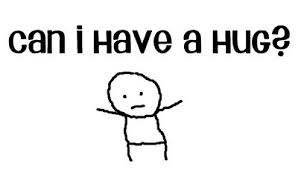
If you think I'm in this situation and want to help, the very best thing you can probably do is to give me a hug (but only if you know me) and ask if I want you to decide. I'll probably nod. It doesn't matter what you choose: the reason I'm like this is because I don't know what I want. If I don't want you to choose, I might just need some time and space. If you can, take me somewhere quiet where we can sit down. I'll probably start to talk to you about it after a while.
Anyway, until a week or two ago, I thought this was just me being bad at making decisions, but then I watched a documentary that got me thinking. It was the fourth episode on David Eagleman's series 'The Brain' and was titled 'How do I decide.' It looked at how both logic and emotion are needed to work together for decision making and showed a case of a lady with a brain injury where these links had been compromised and how she now finds even the simplest decisions incapacitating and can get emotional over it. I wondered if it could be at all related to AS, thinking about how the brain works differently with emotions and things, so had a look on the internet, and it looks like I'm certainly not the only one.
More to follow on what I found!
Subscribe to:
Posts (Atom)